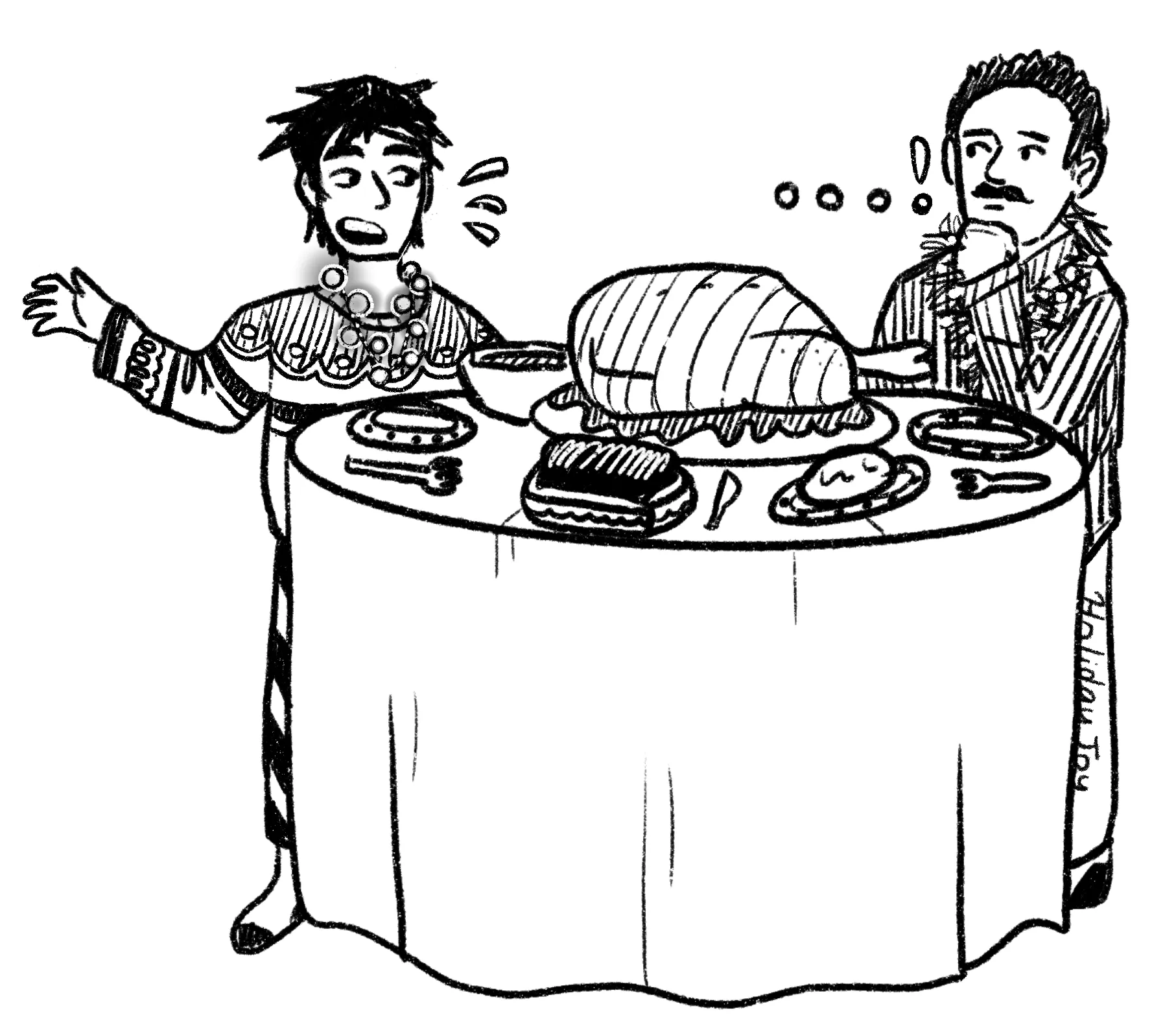
For most of us, winter break offers an opportunity to relax and spend time with our friends and family. Comforting dinners around grandma’s kitchen table are often the pinnacle of the holiday season, but in today’s divided political climate, a warm conversation with extended relatives can quickly turn into a heated debate. Mentioning a controversial topic can twist a once pleasant vacation into an uncomfortable situation, causing some teens to feel apprehensive about discussing political topics around relatives. As the rift between political values grows wider, this is becoming a more frequent problem.
In 2024, Pew Research Center conducted a study revealing that 66 percent of voters ages 18–24 aligned with the Democratic party, while 51 percent of voters ages 70–79 and 58 percent of voters age 80+ aligned with the Republican party. This difference in political alignment and beliefs between the age categories contributes to political disagreements between younger and older generations. Another factor that has been increasing tension between Republicans and Democrats is ideological polarization. Ideological polarization is when beliefs are split into two harsh extremes, with little common ground. Over time, this gap has become more and more pronounced, causing a sharp divide between the beliefs of individuals affiliated with different parties.
If you are worried about getting into delicate conversations, there are many ways to sidestep or minimize their consequences. As a whole, try to keep political discussions to a minimum whenever possible. Set clear boundaries if you are aware that your beliefs clash with your relatives. However, if somehow a discussion does come up that you would not like to be a part of, you can avoid it by switching to a more neutral topic, such as the weather, movies, sports, or a shared memory.
If you do in fact enjoy debating about politics, it’s important to approach disagreements thoughtfully. First, you should try to understand the other person’s perspective rather than jump in and automatically try to convince them of your ideas. When you are attempting to persuade a relative on an issue, ensure that the dispute does not push them away but rather makes them consider your position. You should remain respectful, calm and collected throughout the duration of the argument, even if the other person does not. You should also ask questions about the other person’s beliefs to better understand their thinking, and show that you care and are listening. Do not be afraid to take a break from the discussion or switch topics if you feel it is getting too intense. This will prevent arguments that hurt your relationship with your relative, or make a meal unpleasant for your family.
As students in an ever-changing world, it is important for us to be exposed to various points of view, including those that clash with our own. Rather than impulsively trying to win a fight, treat every rebuttal as a learning opportunity. Above all, prioritize your relationship with your family — be mindful of your words when political issues surface and maintain a respectful tone. In the end, the holiday season is for spending joyful time with your loved ones, so take gratitude in every interaction.