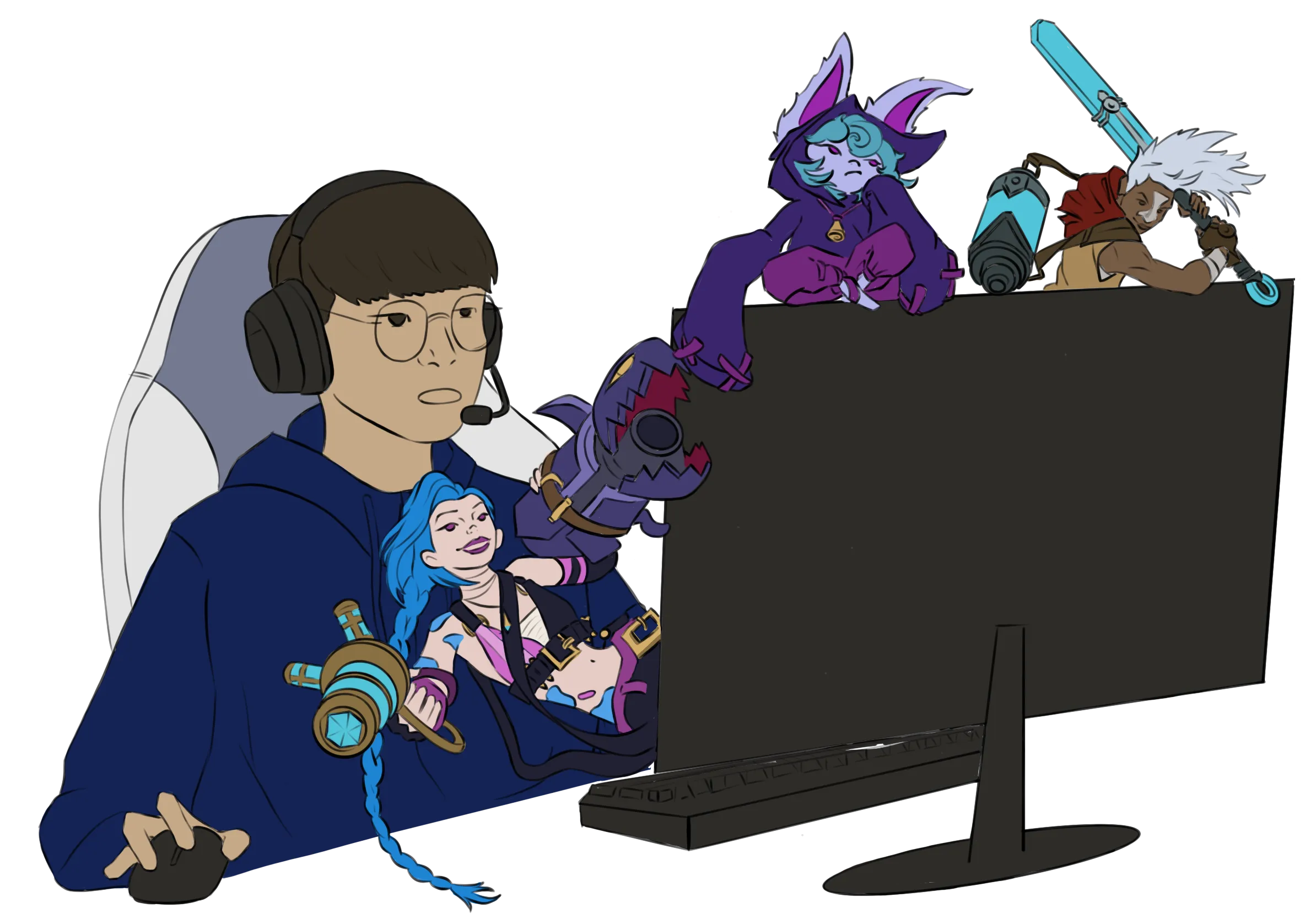
Earning another summoner’s belt, South Korea team T1 didn’t just win Worlds 2025; they reminded the world why their dynasty refuses to die. League of Legends is a multiplayer game where two teams of five players each try to destroy the other team’s nexus. Every player controls a character known as a champion, each with special abilities and roles. The game uses strategy and teamwork as players try to out-battle and out-smart the opposing team. The strategy, competition, and organized leagues make the game an esport that has been growing in popularity since its creation.
T1 defeated fellow South Korean team KT Rolster in a dramatic 3-2 series to win the 2025 League of Legends world title on November 9 in Chengdu, China. This win marks T1’s dominance, as they are the first team in League of Legends history to win three consecutive world championships, making this their sixth world title.
On average, roughly 6.7 million people tuned in to watch the final between T1 and KT Rolster. The event also held massive opening ceremonies, featuring K-pop stars, popular singers, and lifelike animations. The game even produces new songs every year for this moment.
“My favorite part was definitely the Grand Finals, just watching T1 and KT go back and forth was crazy. Every game felt super cool and like it could flip any second,” said Sahil Ponnada ’29. “The hype and the crowd was all super energetic and made me feel really part of the moment.”
T1, along with KT Rolster, were two of the four teams sent by the League of Legends Champions Korea (LCK). The rivalry between the two teams gained so much significance in the world of esports that it became known as the “Telecom War,” stemming from the fact that both teams were founded by major telecommunications companies: SK Telecom and KT Corporation. The rivalry between their organizations is not limited to League of Legends; it began in StarCraft in the early 2000s and continues in other competitive games and sports like basketball.
Stars such as Faker, who first went viral back in 2013 from a clip demonstrating his skills in a solo mission, drew in further interest towards the game. He later earned an exemption from the Korean mandatory military service by earning a gold medal in the Asian Games, allowing him to play in future League of Legends events.
“I think [Faker] is gonna keep going until he gets bored of it. This is the LeBron James of esports,” said Edward Yin, a Computer Science Teacher. “League of Legends is competitive. It’s a thing of national pride, right? So in a certain sense, he represents Korea on the world stage for a competitive event.”
From the opening ceremonies to the very end, the League of Legends tournament has gained popularity from across the globe while also elevating the game and its community. As this year’s tournament has drawn to a close, the future of the esport appears to be bright.