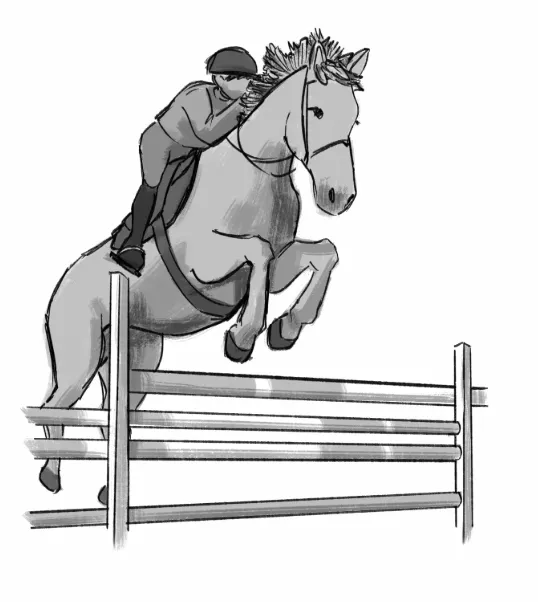
In some sports, the competition starts far before the whistle blows. Training, equipment, and travel costs can create invisible barriers, preventing many from entering or even considering playing, while the more privileged few move forward. In elitist sports such as Formula 1, fencing, and horseback riding, access, resources, and social connections often determine who is even allowed to compete. In these sports, the opportunity to compete often matters more than the willingness to play.
Especially in fencing, which requires up to twenty thousand dollars a year to compete in, creating unequal opportunity for players unable to finance the expenses of the sport.
“Just the money and the gear, it’s a lot more expensive than you would think. All of these clubs also require a lot of money,” said Ethan Hu ’27.
Not everyone who can play these sports will participate, which narrows the pool of athletes for these sports even more. On the other hand, other sports like soccer, cross country or track, and volleyball have low barriers of entry, allowing the amount of people who play the sport to be so much higher. Thus, sports such as running find their way into the lives of many people, including PHS students.
“[Almost] everyone can do running as a sport. All you need is some trainers, some proper running clothes, and then you can run,” said cross country runner Isaac Son ’27.
While sports like running can open the door to nearly anyone with determination, many other sports remain guarded by price tags that only a few can afford. Access to the proper facilities, private coaching, and travel for competitions often determines who is able to join in and participate and who can only watch from the sidelines. This divide can become the most visible in sports that have traditionally been associated with privilege, such as golf and horseback riding. For example, a standard membership at Bella Vista Country Club in Marlboro, New Jersey is $1,300, with an additional $5,000 annual golf fee and $500 monthly fee.
“[For golf], you have to pay to get into clubs and you need to pay to get into tournaments. It’s pretty expensive, [and] I don’t know anyone who is not wealthy who plays,” said Ronan Madan ’29. “It’s just the way it is.”
Just like in other sports, when athletes don’t have as much financial support, their choices are limited and they are often not able to make the decision they believe would be best for them. When athletes do not own their equipment, potentially due to not being able to, they are put at a disadvantage. For example, in equestrian riding, riders can either own a horse or lease a horse. Owning a horse is significantly more expensive due to maintenance costs like the vet, food, and board. However, it allows for a deeper connection between the rider and animal, leading to greater effectiveness in training, a privilege not available to those who can’t afford to own.
“If you own a horse, you can make your own decisions about your skill level and performance in competitions,” said Andrea McBride ’29. “But if you lease your horse, you don’t have the privilege to make those serious decisions about your sport.”
While the process of learning and starting to play many sports only involves getting a coach and somewhere to practice, some sports, such as F1, golf, and horseback riding, have a high barrier to entry that only money can overcome. Though elitist sports may dazzle fans with precision and discipline, they also expose how deeply inequality runs through the world of athletics. When participation depends on money more than merit, many athletes are left in the dust before they even get a chance to take a step forward.