Throughout history, sports have always been a major source of entertainment and activity. The first major sporting event, the Olympic Games, took place over 2700 years ago. Even before, the earliest mention of physical recreation can be found in muddy cave paintings from the Stone Age. While some ancient sports have faded from common practice, many have continued to be carried out today in different forms, honoring the rich cultural roots they represent.
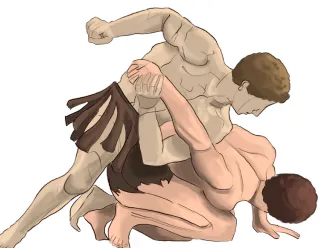
Pankration, a combination of boxing and wrestling with little to no restrictions, was extremely popular in ancient Greece. After being introduced in 648 B.C. at the Olympics, it quickly became a fan-favorite, especially for the warrior-like Spartans. Unlike modern wrestling, the game would only stop if the opponent was rendered unconscious or admitted defeat. The only fouls recognized were biting and gouging, leading to competitors sometimes dying in the ring. Despite this gruesome aspect, the sport had many myths surrounding it, only fueling the respect and awe of the public towards the athletes. It was believed at the time that the mythical hero,Theseus, was said to have defeated a the Minotaur, and he did it by wrestling the beast with his bare hands. Today, pankration is no longer practiced due to its violent nature, but it serves as a striking reminder of how vastly different the limitations were of sports in the past.
A popular game in ancient and current times, kabaddi is the second most viewed sport, after cricket, in India. The game operates similarly to a more competitive version of tag. Two teams of seven players start on either side of a court and send one person to infiltrate the other team’s “territory.” The person called the “Raider,” tries to tag all seven players on the opposite team, the “Antis,” in a tricky game of one versus seven. However, the raider also must tag as many opponents as they can in a single breath without being caught to score points for their team. Speculated to have emerged in prehistoric times, the game was essential for developing reflexes for hunting and self-defense.
Known as the “sport of kings” from over two thousand years ago, the Persian sport chovgan is the forerunner of polo. The sport is played on Karabakh stallions, prized Azerbaijan horses that are recognized by UNESCO, along with the sport, as a cultural heritage. The rules are essentially the same as polo; two teams riding horses try to hit the ball through the goalposts using a long wooden mallet. However, no safety gear is allowed for the players — requiring courage in addition to skill to play the game. Back in ancient times, musicians would perform traditional music, and storytellers would narrate folk tales. This resulted in a beautiful combination of different cultural elements that displayed a nation’s history and identity in a single game.
Knattleikr, played by the Vikings, was a brutal, unrestrained sport to demonstrate one’s battle potential, similar to pankration. The game was mentioned throughout Icelandic sagas, a collection of thirteenth and fourteenth-century works about the great Viking families. Though the exact details of the sport’s rules remain vague, according to historian William Short, the only objective was to get the ball across the field by any means necessary. The players would carry wooden bats to bludgeon their opponents, which often resulted in severe injuries and bloody spats on the field. Tournaments could go on for weeks, with entire camps set up of spectators coming to watch.Orðstír or glory was seen as the ultimate goal for the Vikings — glory and respect earned from the game lasted even after death. The game joins the list of ancient sports no longer practiced, but certain archaeological groups like the Hurstwic Viking Combat group specialize in safely recreating it for audiences.
These ancient practices were more than just physical activities; they were a reflection of the values and traditions of the societies that created them. Over time, many have evolved or even disappeared from practice, but their influence remains in modern-day sports. Whether they are practiced in different forms today or lived in the past, ancient sports helped shape our understanding of values and culture in the athletic world.