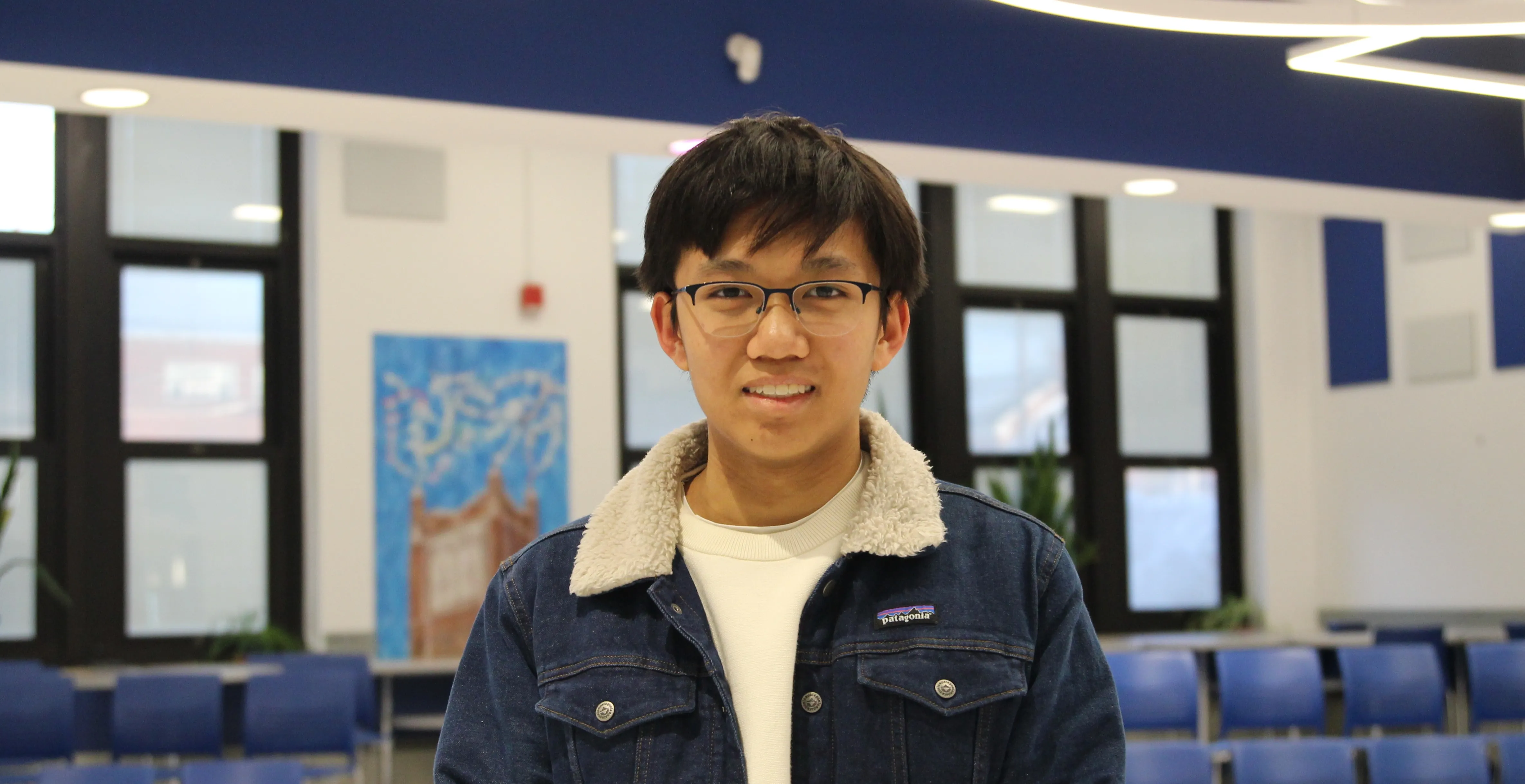
With foil in hand, James Huang ’26 stays focused as the match comes down to its final moments. His teammates hold their breaths, waiting for the buzzer to light up.
After several back and forths, Huang makes his final lunge and touches his blade to his opponent’s chest, taking the win.
Huang was first introduced to fencing by his parents six years ago when they brought him to Medeo, a fencing club in Bridgewater. There, he began training with a private coach, Andre Zamlynny, who taught him the fundamentals of fencing. Together, Huang worked hard to improve his skills.
“I remember in my sophomore year, I didn’t have much of a foundation in any other sport, but I realized that … with the knowledge that I had of fencing, I was able to continue progressing in the sport,” said Huang.
Although fencing eventually became his focus, Huang’s mindset was shaped by his background as a rower.
“[Rowing] really taught me how to put in hard work and dedication into a sport, but I think that moving on to fencing was a great choice, and I believe that it’s the right sport for me,” said Huang.
After working with his coach for three years, Huang joined the PHS boys fencing team in April of 2024, where Huang fit in immediately. Throughout his time on the team, Huang has inspired his teammates, serving as both a mentor and a leader.
“[Huang] serves as a mentor [and] teaching role for me and many others in fencing, specifically foil,” said teammate Ethan Hu ’27. “He’s my head captain this year ... was my blade captain [sophomore] and freshman year. He was teaching me the ropes [and] showing me how things work.”
During his time on the team, the fencing program went through a difficult transition due to losing their prior coach, Sam Blanchard. While the team worked toward finding new coaches, Huang stepped up to help support the team and make the transition smoother for both teammates and the new coaches, Dr. Katie Dineen and Victor Lau.
“He wanted to make sure that I was around because they had recently lost their coach,” said Lau. “He was one of the first people to contact me … and [help] me learn the process of what coaching the team would be like.”
Although Dineen and Lau were new to the fencing program, Huang made a memorable impression on them. In particular, his understanding of the game helped the new coaches quickly acclimate themselves.
“It was so helpful to have someone who knew which equipment we needed, how to set up the space, [who knew] the rules, and was willing to coach new players … I was just very grateful to have someone who cared so much about the program,” said Dineen.
In contrast, Lau already knew Huang before becoming a coach. Before joining the boys fencing team, Lau had Huang as a student.
“James was my student before I knew him as a fencer. So he’s a good student, first and foremost. He’s really enthusiastic [and] he loves fencing,” said Lau.
This attitude has allowed Huang to end his career with a 55–36 record. Through Huang’s many achievements throughout his career, he sees one particular accolade as his “greatest.”
“My greatest accomplishment was making it to individual states, which means that I qualified among the top 50 fencers in New Jersey,” said Huang.
As Huang has a deep passion for fencing, this accomplishment showed how much his hard work and dedication had paid off. After struggling earlier in his career, qualifying for states reminded him that putting in effort allows him to continually improve and succeed.
As Huang’s time on the PHS fencing team is coming to an end, the lessons he learned from fencing will stay with him during his transition from high school to college. “The biggest takeaway from fencing for me is that no matter how much hard work you put in, you’ll be able to get twice as much with other people supporting [you],” said Huan