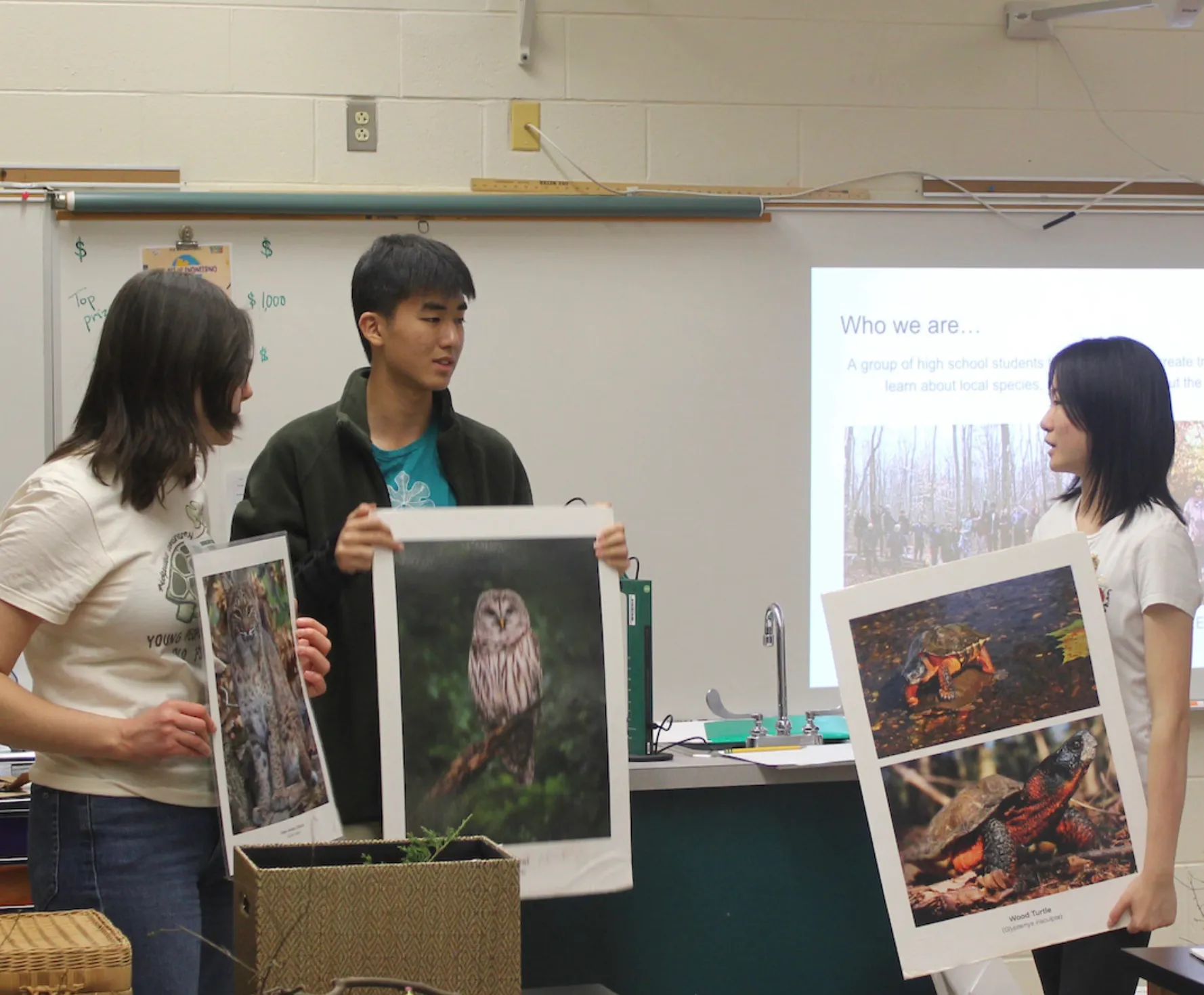
On December 8th, the Ridgeview Turtles hosted a session to teach K-5 teachers throughout the Princeton Public Schools district about how to incorporate lessons on conservation and climate change into their curriculum. The Turtles are a PHS community service group that meets every weekend to restore Princeton’s forests and remove invasive species.
“The main goal is to get students to understand their local environment — so often we talk about far off places when we could be talking about here. And also just to get students to see that they can use science to solve problems in their own lives,” said Jaccqueline Katz, Supervisor of Science Education at PHS.
Though the Turtles have been teaching leading environmental and conservation activities at Johnson Park for years, they hope to expand the current after-school program and incorporate it into the regular school curriculum.
“We [are] creating the next generation of young environmental stewards. We are trying to show that it’s important to have environmental education within our education system because [the system is currently] really outdated,” said Andrew Kim ’26, one of the leaders of the Turtles.
In addition to talking about preservation, the Turtles also showcased potential lesson plans. “We have [an activity] where we have preserved leaves and nuts from trees and kids [use them for] a matching game. The [goal] is to give teachers ideas [about] how you can teach climate change in a more attractive way,” said Elif Cam ’26, another leader of the Turtles.
The environmental teaching will be split into two parts, one in the classroom and one outside, according to Dr. Patricia Shanley, a scientist and longtime mentor for the Turtles.
“[The students] will learn which species they have on their property, what are those used for, which ones make maple syrup or pancakes…what the Turtles can do is to open the eyes of both the teachers and the students as to the miracle of what’s outside their classroom. [Then] they would get some of the conceptual overview in the classroom…the link of local [environmental issues] to global [problems],” said Shanley.