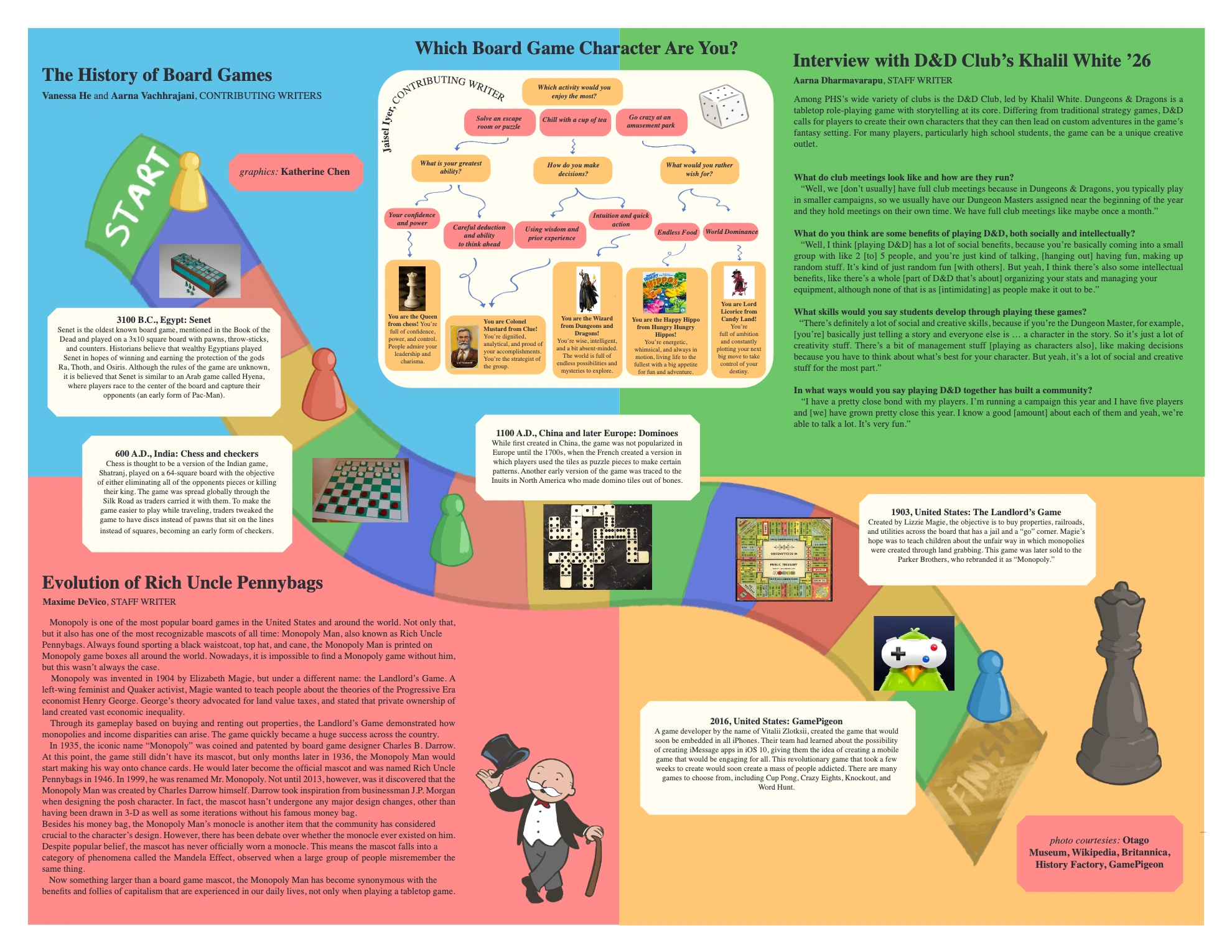
Monopoly is one of the most popular board games in the United States and around the world. Not only that, but it also has one of the most recognizable mascots of all time: Monopoly Man, also known as Rich Uncle Pennybags. Always found sporting a black waistcoat, top hat, and cane, the Monopoly Man is printed on Monopoly game boxes all around the world. Nowadays, it is impossible to find a Monopoly game without him, but this wasn’t always the case.
Monopoly was invented in 1904 by Elizabeth Magie, but under a different name: The Landlord’s Game. A left-wing feminist and Quaker activist, Magie wanted to teach people about the theories of the Progressive Era economist Henry George. George’s theory advocated for land value taxes, and stated that private ownership of land created vast economic inequality.
Through its gameplay based on buying and renting out properties, the Landlord’s Game demonstrated how monopolies and income disparities can arise. The game quickly became a huge success across the country.
In 1935, the iconic name “Monopoly” was coined and patented by board game designer Charles B. Darrow. At this point, the game still didn’t have its mascot, but only months later in 1936, the Monopoly Man would start making his way onto chance cards. He would later become the official mascot and was named Rich Uncle Pennybags in 1946. In 1999, he was renamed Mr. Monopoly. Not until 2013, however, was it discovered that the Monopoly Man was created by Charles Darrow himself. Darrow took inspiration from businessman J.P. Morgan when designing the posh character. In fact, the mascot hasn’t undergone any major design changes, other than having been drawn in 3-D as well as some iterations without his famous money bag.
Besides his money bag, the Monopoly Man’s monocle is another item that the community has considered crucial to the character’s design. However, there has been debate over whether the monocle ever existed on him. Despite popular belief, the mascot has never officially worn a monocle. This means the mascot falls into a category of phenomena called the Mandela Effect, observed when a large group of people misremember the same thing.
Now something larger than a board game mascot, the Monopoly Man has become synonymous with the benefits and follies of capitalism that are experienced in our daily lives, not only when playing a tabletop game.