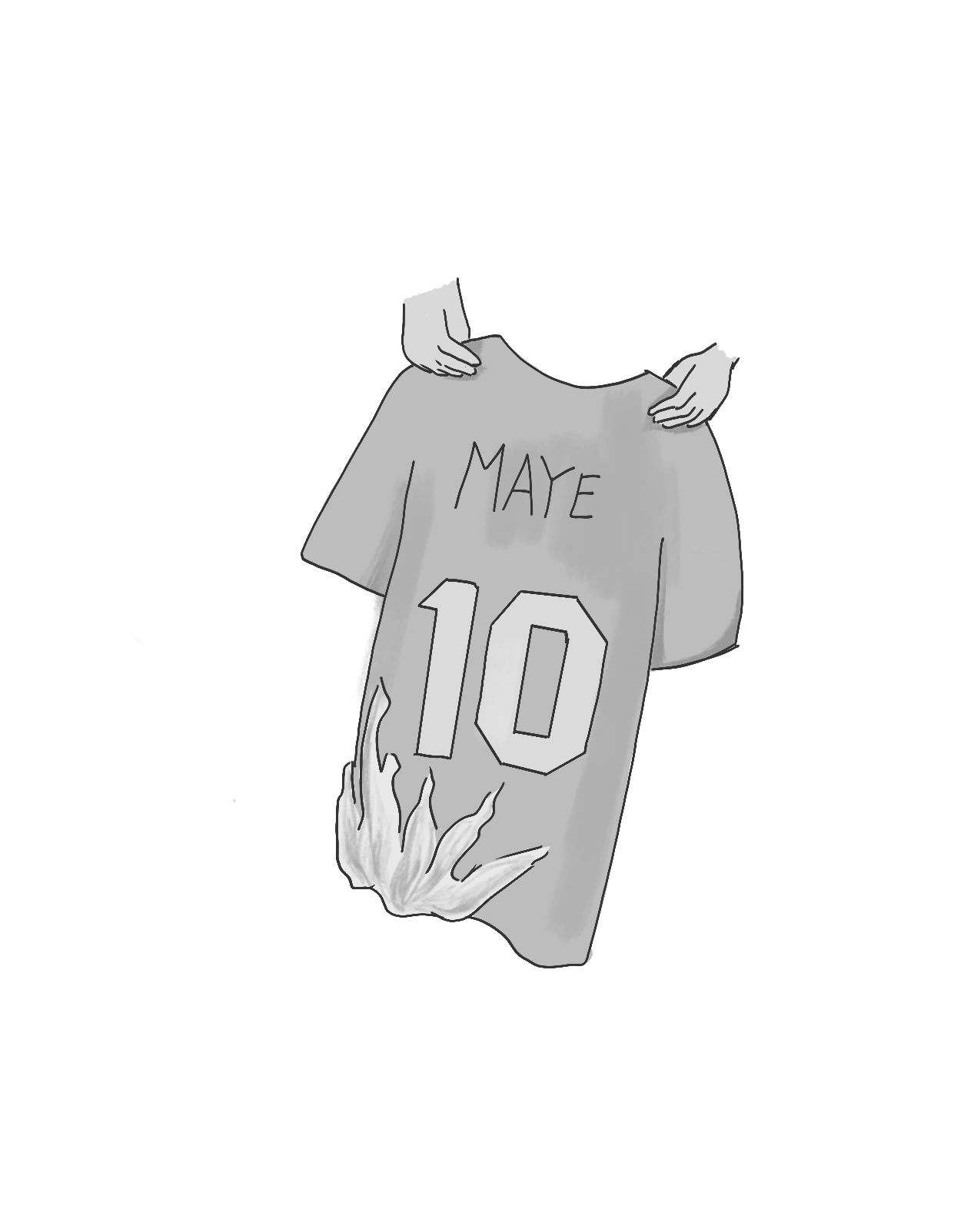
Earlier this year, the city of New York collectively stood a bit taller, held their heads a bit higher, and reveled in their shared glory of bringing the NBA championship back home. Except, out of the millions of New York Knicks supporters, only 18 players technically “won” the 2026 NBA Finals. Furthermore, it seemed like everyone here at PHS became a Knicks fan, wearing jerseys to school and filling hallways with chatter about how great the game was.
Nevertheless, social media platforms like Instagram flooded with posts and stories about the Knicks. The Long Island Rail Road became a reunion for family, who shared nothing more than the coincidence of being at the same place at the same time. Indeed, this form of excitement and hype has earned itself an acronym: BIRGing, or basking in reflected glory.
But why are people so invested in the successes of their favorite sports team? Although some psychologists chalk it up to a simple fulfillment of the need for entertainment or the escape of stress, BIRGing implicitly suggests that people use their team’s success as a social tool. By aligning themselves with a successful team, they subconsciously project the positive emotions and self-esteem boost of winning onto themselves without any of the effort and work. In Princeton, this is usually passed off as the idea of “school spirit,” where we celebrate the wins of every team together. Another common idea is the bandwagon effect, where individuals adopt certain behaviors or styles simply because many others are doing so; in sports, specifically, this would manifest in the form of supporting a team that is actively doing well, which has resulted in the colloquial term of “glory hunters.”
However, BIRGing can also reveal underlying issues within our society. In particular, it reveals the role of collectivism and the need for validation from others. First, by using inclusive language, which can be as simple as referring to a favorite team with first-person pronouns, it builds a collective, merging separate identities into a larger whole. However, this desire to be included can also produce a litany of harmful psychological effects.
For instance, the counterpart of BIRGing is CORFing, or cutting off reflected failure, where individuals attempt to sever ties with something that is unsuccessful in fear of being shamed, which ties back into the growing need to appeal to others.
Just like how our students celebrate all our wins, it is common for everyone to build up a wall at the sight of a loss — “I don’t do that sport” or even “that would never happen to me.” As mentioned above, social media can both amplify BIRGing and CORFing by serving as an outlet for people to broadcast their affiliations.
Although sports are win-loss, overemphasizing that aspect can take away from the thrill, camaraderie, and so many more things gained from watching the game. When your mindset easily switches from “we won” after a victory, to “they lost” or “they did terrible” at a setback, that causes damage to both the players and the community surrounding them. Players already have plenty to worry about without the constant thought of their “fans” blasting them on social media after every mistake. Adding another concern to their already high pile does nothing but cause distress to the players, hurting their performance in-game along with their well-being out of the game. A true fandom relies on the joint passion for the team — the distancing of oneself from that community breaks down those bonds. Morale is lost when the community surrounding a team is reduced to just a group of people absent half the time. The same can be said for the community at PHS — when divides are put up, the interactions throughout the school are negatively affected.
Today’s society has such strong communication and so many ways to display your thoughts, opinions, and beliefs. This allows people to feel more heavily scrutinized by others, making them more self-aware of their image; thus, BIRGing and CORFing arise as a coping mechanism.
With today’s society full of the false realities that influencers put out, it can at times feel like if you aren’t constantly winning, you’re falling behind. For many people, BIRGing is a convenient way to fulfill this feeling, allowing them to claim someone else’s win for themselves. The other side of the coin is the shame one may feel if a loss is projected onto themselves. CORFing takes place in the same situation, except instead of attaching themselves to another, they distance themselves, in hopes that the “shame” related to a loss will not reflect onto them.
Ultimately, BIRGing and CORFing remind us that our loyalty to a team is about so much more than just the sport — it’s a journey for self-esteem, connection, and identity.