For some athletes, the game doesn’t start when they step onto the field. Their performance can be affected by the preparation they do. Performance visualization is a commonly utilized technique in sports psychology that can have a noticeable impact on a player’s success. Specifically, it is the process of mentally rehearsing a skill before it is actually completed. Athletes will visualize themselves making a smart play, following through a shot, or shutting down the other team’s offense. By envisioning themselves succeeding, athletes become more comfortable with what they want to accomplish and feel more prepared when the opportunity arises to perform.
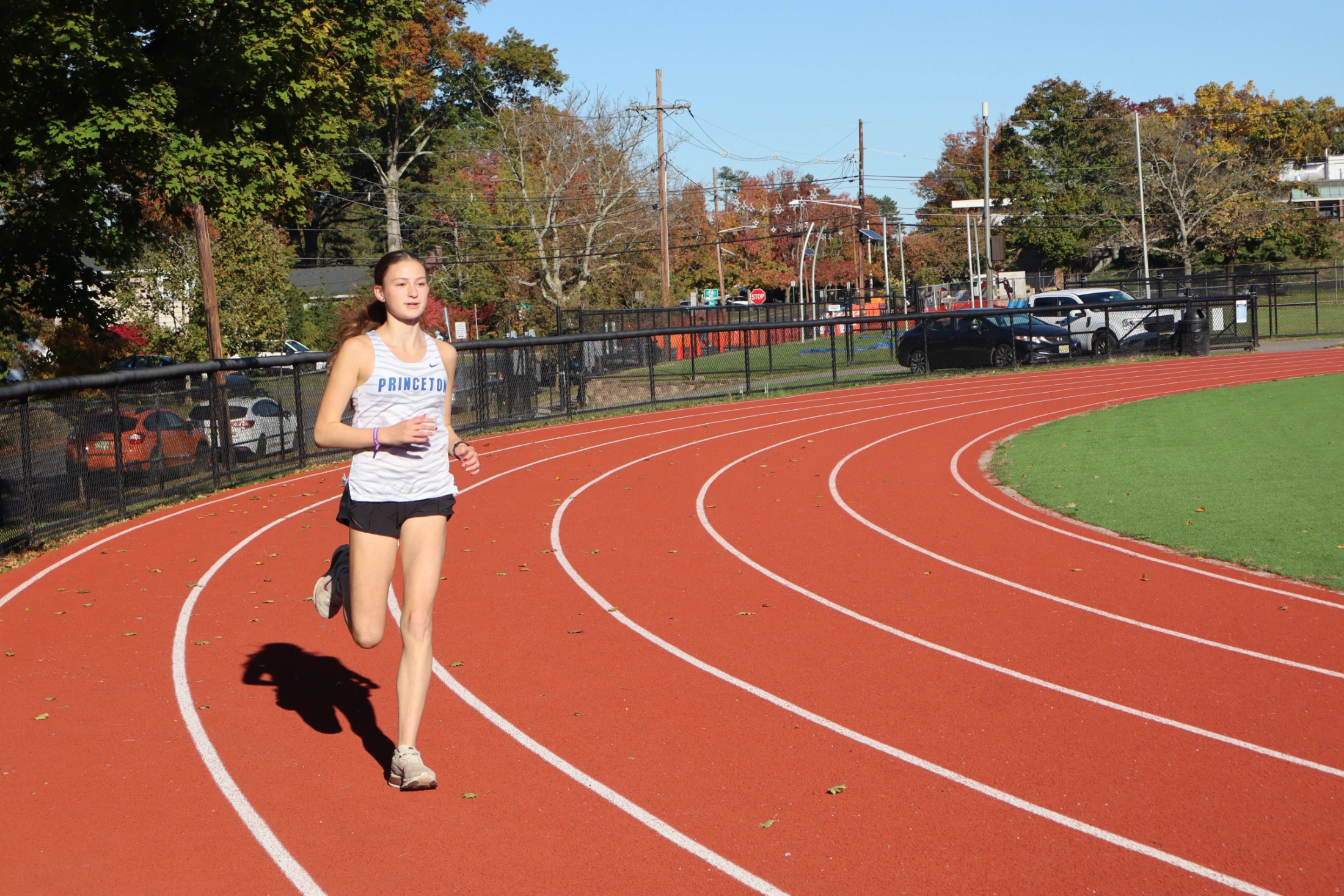
Although some may believe performance visualization is purely imagining yourself engaging in a sport, it serves as an important preparation for athletes before a game. In basketball, for instance, players often go over their free throw routine in their mind before actually taking the shot. For cross country runner Clementine Nieman ’30, mentally rehearsing herself running through a course helps her stay focused and know when to push harder throughout the race.
“I really like knowing where the one-mile mark and the two-mile mark [are] because it just helps me a lot with pacing and just knowing how much effort I should be giving,” said Nieman. “It just tells me when I should start racing.”
Mental visualization in sports is not always about physical ability; an athlete can know exactly what they need to perform successfully yet still continue to struggle when they are under stress or uncertain of themselves. When a situation is practiced in advance, it allows the athlete to feel a sense of familiarity and can appear more natural when it actually occurs. Athletes can have an idea of how they are going to react, rather than having to figure it out in the moment.
Although performance visualization may not immediately enhance an athlete’s physical capabilities, it allows athletes to help deal with their stress and anxiety. Envisioning themselves completing a skill or movement and having a plan on how to approach the competition helps athletes have a sense of control and confidence.
Performance visualization not only makes an athlete feel more prepared, but also helps the brain practice movements and skills. According to a 2025 study by the National Library of Medicine, when an athlete imagines performing a skill, it enhances athletic performance by activating the same neural pathways that it does when the skill is physically being performed. Additionally, this illustrates how the brain develops and how that visualization strengthens muscle memory, allowing athletes to prepare a mindset that overcomes mental battles more easily. Rather than going into a game or race without a plan, athletes can utilize mental rehearsals to set goals that they want to accomplish and shift their attention toward their competition.
“I definitely think that knowing the course better, it just prepares you so much more,” said Nieman. “Also, ... if I know the course beforehand, [I’ll] tell myself ‘Oh, if I know this course better than other people, then that means I can do better than them,’ [which] allows me to believe in myself more.”
Even though performance visualization may seem as simply thinking about a game or race in one’s head, it is an effective technique that offers athletes a way to prepare for competition. By envisioning success before the real game starts, athletes can show up confident, prepared, and with a stronger mindset, ready to take home the victory.