At a time when the value of higher education lies in question as fears over AI loom, it warrants the question: what can college teach us to do that AI can’t replace?
And that is where the increasing relevance of liberal arts institutions becomes more clearly apparent. Small, picturesque, and nestled far from the hustle of the grind, these colleges in fact offer more than meets the eye, especially in our changing educational environment.
The goal of a college education, for many, can be summarized in a few key goals: many chase a prestigious name, a specialized pre-professional track, and look to master a set of narrow yet highly marketable skills that immediately make them valuable assets for the future workforce. That sequence made a lot of sense when workplaces awarded increasingly specialized skillsets; whether it be writing code, reading legal briefs, or building financial models, it was a skill to be learned and mastered to the highest degree, and then immediately applied to the market. That was how new hires created economic value for companies.
And then came what has been called the innovation of the century, the Fourth Industrial Revolution. The final nail in the coffin for the human race. Whatever your AI euphemism of choice may be, it is hard to deny the impending impact of AI. It has so far revolutionized countless industries and promises to touch every corner of our life.
The educational landscape is no exception to AI’s impact. And that is where the true value of liberal arts education becomes apparent: when knowing how to do things automated, abundant, and cheap, the value of knowing how to think becomes ever more treasured.
A model of education that relies on interdisciplinary learning speaks perfectly to this: when a computer scientist must wrestle with ethics, when a biologist must understand history, and when an economist must confront human psychology.
The logic of this breadth has seldom been more practical. Specialized technical knowledge now carries a lower shelf — every new software and advancement in automated systems threatens to put a whole strata of workers into the realm of structural unemployment.
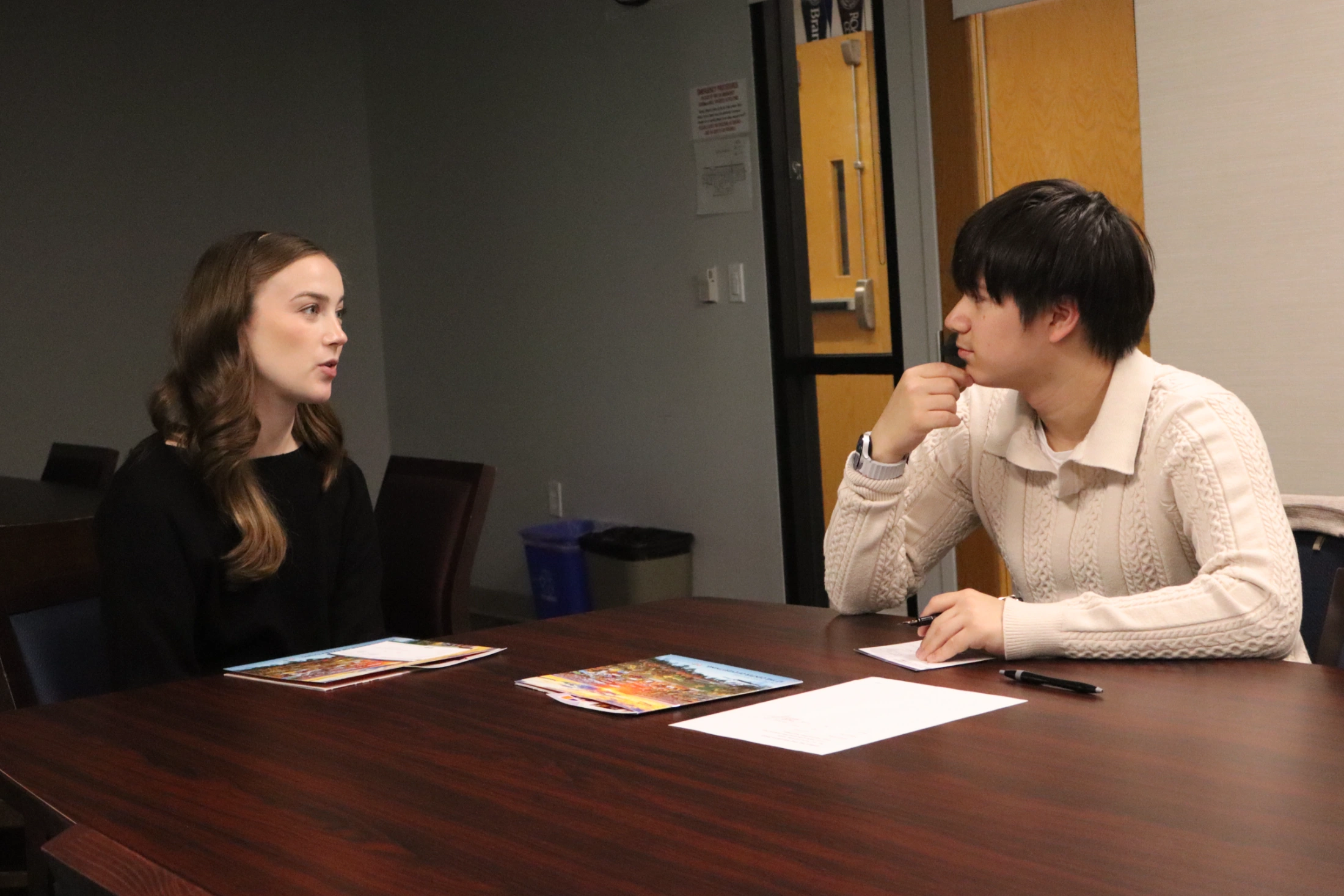
To address the long-held caricature of LACs as an escape from the grind of rigorous STEM or a cozy refuge lacking direction on their ambitions, one must consider how differently these institutions operate. In a college of 2,000 students where a large portion of courses are taught in 12-person seminars, disappearing in a sea of faces becomes impossible. There is no buffer between your professor and you that rote memorization can save. When you’re asked to defend your argument at a roundtable discussion, no chatbot can step in to do the thinking for you.
Indeed, at a time when the classroom is increasingly fraught with worries about AI “replacing” education, a true liberal arts education doesn’t just AI-proof you after the degree but also provides an education that’s hard to automate. In an economy where machines can fluently generate automated content, employers are increasingly searching for thinkers who can frame the right question, weigh competing human values, and read nuance that no algorithm can hope to capture.
By focusing on questioning rigid frameworks — where the rule is to bend the rules — an LAC education promises a glimpse at something no conventional lecture can: the uncomfortable, irreplaceable friction of original thought. Try replacing that, AI.
As PHS students, we must consider the type of education we strive for. Do we want to be trained to be those who execute a set step of actions, or do we want to be the ones asking questions on the “why” and “how?” To view learning as an eternal quest of discovery rather than a degree to be framed after four years: only then does our education become more than a tunnel to our first job and widen into a foundation sturdy enough to outlast any single software update.