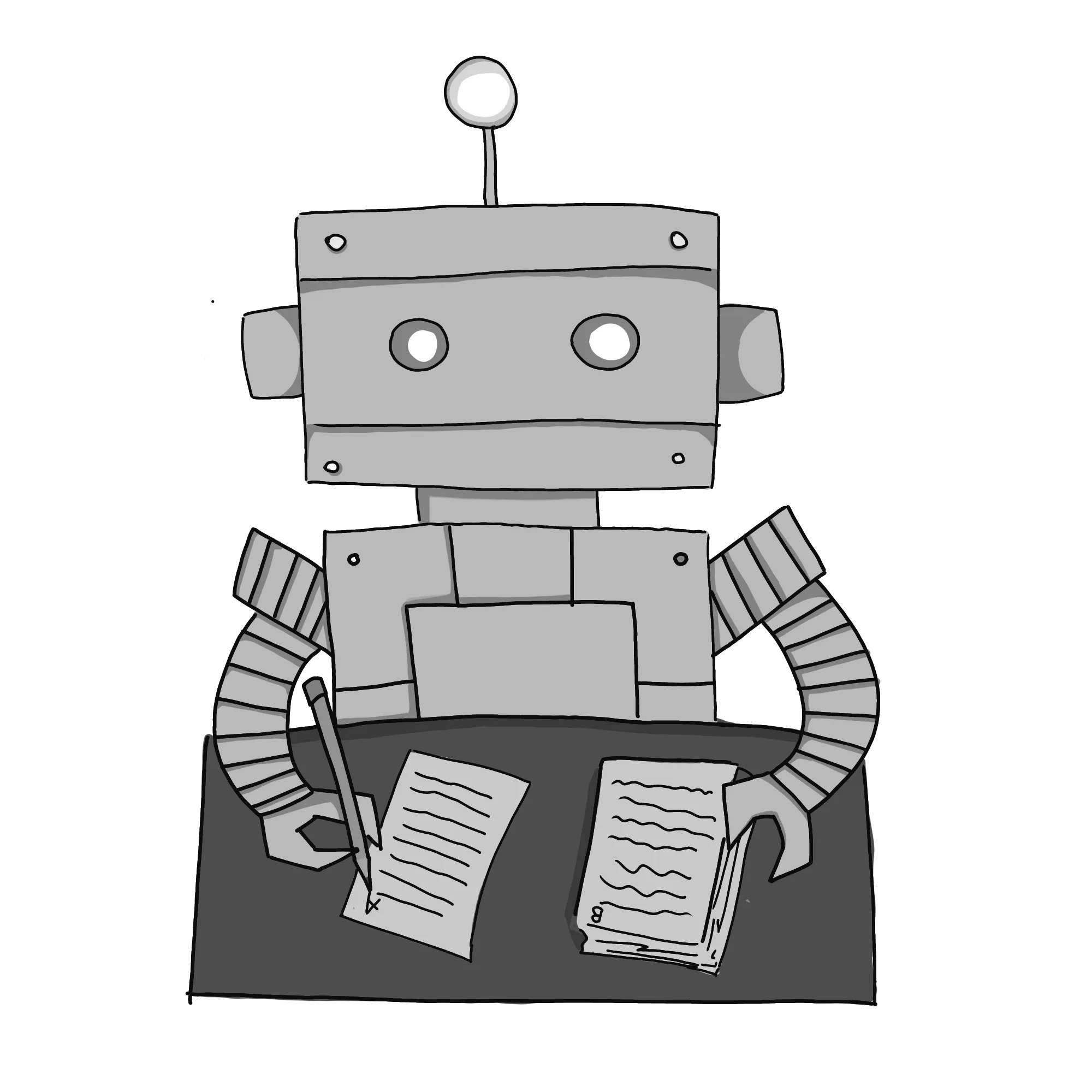
A spectre looms over modern education; this time, the students are not the perpetrators in question. In a recent policy decision, New Jersey state education officials have decided to use artificial intelligence (AI) to grade written sections of standardized tests such as the New Jersey Student Learning Assessments (NJSLA) and the New Jersey Graduation Proficiency Assessment (NJGPA). This decision was not made in isolation: it reflects a growing trend of states moving away from human graders, with around 30 states expressing desire to integrate AI into their grading systems for the 2026-2027 school year. These states primarily cite the desire to cut costs, with Texas stating that their shift has saved the administration from $15-20 million dollars.
Since its inception, the use of AI has been justified because it cuts costs, but to what extent is efficiency more important than preserving justice and humanity? The new system imposed by the state uses Natural Language Processing (NLP), trained on previous responses that scored the full score. Though this is not generative AI like ChatGPT or Gemini, it is still fundamentally based on pattern recognition, which means that in order to earn full points, students will be incentivized to mimic existing pieces of work and regurgitate existing ideas. The argumentative essay section of the NJGPA is a clear example of just how harmful this technology is because these kinds of essays can be approached from many angles; the experiences that a person has lived and the subjects that they find interesting all influence the arguments that a person ends up writing down. However, an NLP-based system will inevitably end up rewarding the responses that most closely conform to what has already been said in the structures that have already been used. In essence, these systems actively suppress and stifle creativity.
More importantly, the usage of AI to grade tests reflects a deeper issue in education: the hypocrisy behind the assertion that students must not use such tools. Education is a system that is based on trust and mutual understanding, a two-way street that both students and policy makers must uphold. Devastatingly, by setting double standards that punish students for using AI while not giving them the respect to review their work with equal levels of integrity, education, as an institution, is degraded from the core. Specifically, these methods of reviewing students’ work discourages them from engaging with or putting effort into these assessments because students know that they can just cheat the system by using buzzwords and trite responses to guarantee a higher score without engaging with the material. By discouraging creativity and encouraging students to bypass the system, education is reduced to a mere formality.
Finally, at its core, this raises an incredibly important question about the future of education: if states are willing to compromise the integrity of their highest stakes tests using machines, how much more are they willing to sacrifice? If the only thing that truly matters to the state administration is reducing costs, then what prevents a cheap model of ChatGPT from outright replacing all human influence from grading? Until the government promises that it will continue to value humanity over profits, creativity over conformity, and thoughts over generated text, the people cannot remain silent. The future of education is a unified effort between students, educators, and officials who write policies that affect school districts. The power to create change lies in all stages, from classrooms to state legislatures.