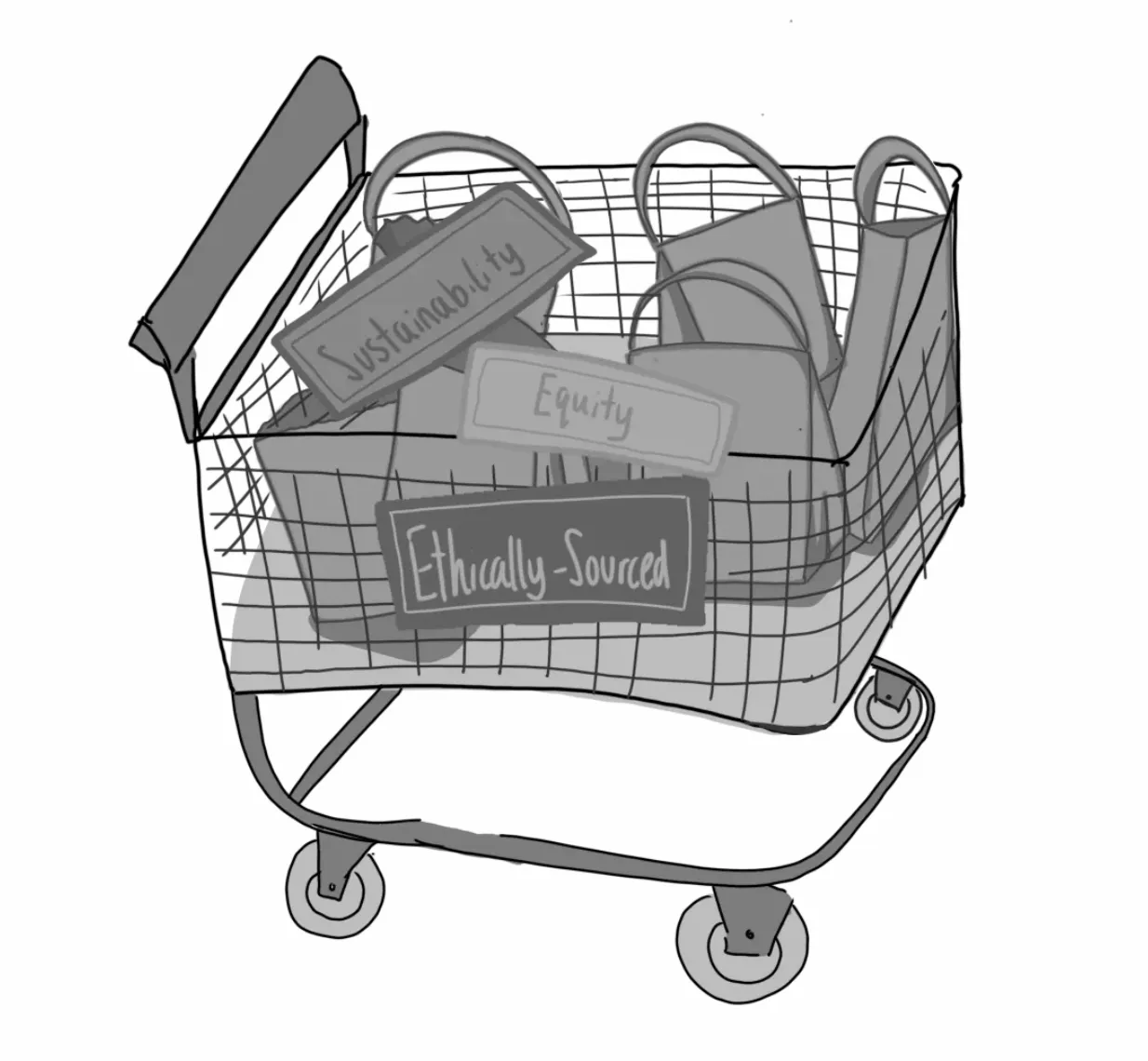
In the late 20th century, Chevron Corporation launched several nature-friendly campaigns; their People Do initiative espoused a commitment to wildlife protection. They promised sustainability. Racial justice. Climate change protections. Yet, according to the United States Government Archives, Chevron is likely partly responsible for 180 incredibly toxic waste sites across the country. Not only does it undermine their commitment to sustainability, but Chevron also self-sabotages its commitment to racial justice by promoting a policy that disproportionately harms people of color, as they are more likely to live near these waste sites. To further drive the point home, Chevron is the second-largest company polluter in the world.
It seems like every company has become dedicated to sustainability and equity in the past few years, and yet almost none have undergone any real change in harmful practices. Chevron is just one more historical example of how corporations have neglected to deliver decades-long promises to become environmentally friendly and treat all employees fairly. Despite these shortcomings, companies continue to use flashy value-promoting marketing terms as a way to easily recruit employees and sell to a devoted public. The main problem with corporate buzzwords is that they are used in place of finding and implementing solutions, as a bandage over a gaping wound. For instance, greenwashing, the practice of deceptively marketing a product as sustainable, has been heavily implemented in the fashion industry. A United Nations report found that the fashion industry has been responsible for over 10 percent of global carbon emissions, yet fashion companies will frequently claim their products are “eco-friendly.”
Such unsubstantiated declarations can create false impressions of job environments for future workers. Saying that a company is devoted to equity, for instance, is more likely to lure prospective employees in for a contract. In fact, a 2021 CNBC survey found almost four-fifths of workers wanted to work for a company that valued DEI. Therefore, claiming that one’s company emphasizes equity has a positive hiring benefit. In reality, companies fail to implement these policies, with both their employees and the public suffering from this unrealized promised potential. Ironically, sustainable practices benefit companies more in the long run, but since we live in a culture of instant gratification, companies often prioritize their immediate profits to satisfy shareholders. Quarterly earnings make companies accountable to their shareholders by requiring them to provide a detailed account of the corporation’s revenue, current and future initiatives, and profit margins. This incentivizes companies to pursue environmental degradation to meet short-term profit thresholds. However, this also raises the question of why companies cannot offer such transparency to the public.
In fact, there is a burgeoning market for consumers who are willing to adjust their spending habits to more environmentally friendly products. Companies that commit to sustainability are more likely to mitigate public relations risks, appeal to a committed workforce that wants to join the purpose the company brings, and tap into additional financial opportunities, according to Harvard Business School. The weaponization of corporate buzzwords doesn’t just harm the consumer, the employee, or even the world as a whole; it harms the company by denying it possible growth. Rejecting sustainable and equitable practices is the definition of cutting off one’s nose to spite one’s face.
The vast majority of the public wants transparency from corporations, transparency that can include data on how much they are truly fulfilling their promises. Demanding this data can go a long way toward accountability. Beyond that, clearly defining what these buzzwords practically mean can allow for their implementation in the private sector, as well as hold companies accountable for actually living up to their promises.
Many PHS graduates will go on to work for corporations, so it is critical that they can decipher commonly used corporate jargon as well as understand how corporations misuse it. Plus, we are all consumers and therefore must make the choice of which companies we purchase from and endorse. In a market-driven capitalistic economy, it is consumers who have the power to make a change.
It’s time to stop letting corporations weaponize buzzwords and instead take action ourselves to demand responsibility. It’s time to realize we are the ones who can build a world where these ideals are carried out, instead of believing companies will change on their own. It’s time to take the initiative.