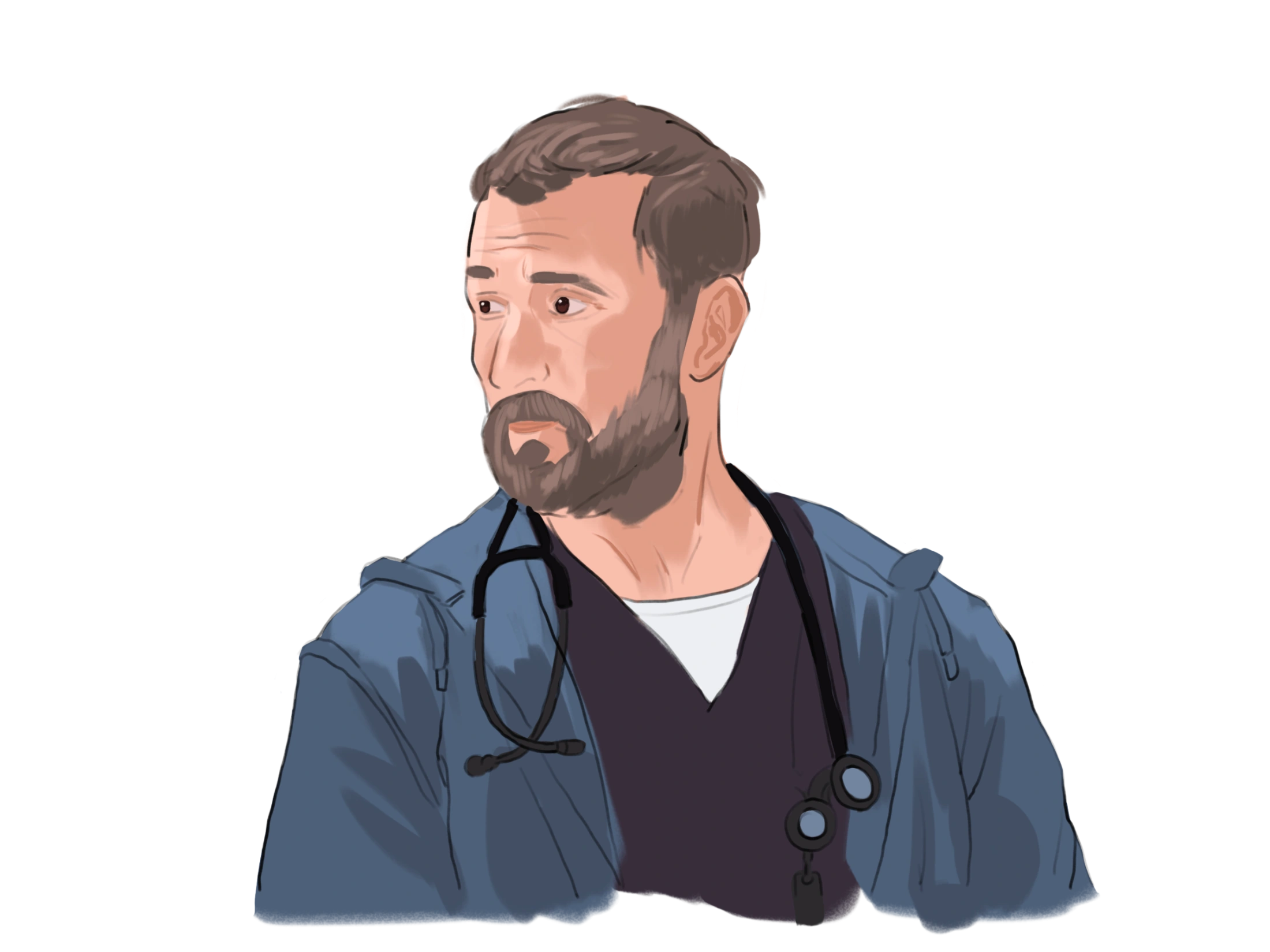
The second season of HBO Max’s award-winning medical drama “The Pitt” finished airing on April 16, 2026. The show, which takes place in a crowded Pittsburgh emergency room, operates with an unusual real-time concept: each season follows the characters through a 15-hour shift, and each episode maps an hour of it. This format allows the viewer a peek into what a day in the life of an emergency room worker might look like — the show, which regularly uses gory prosthetics to accurately imitate injuries, prides itself on medical realism. Season two of “The Pitt” follows most of the same characters — and their conflicts — as the first, along with several new additions, including two new medical students and a nurse.
Attending physician and head of the hospital’s emergency department Dr. Michael “Robby” Robinavitch (Noah Wyle, also a director and writer on the show) remains the show’s focus, though season two puts an interesting spin on his characterization: where in the first season he was a noble-if-traumatized hero-without-a-cape, the second season dives deeper into the more unsavory qualities that stem from his repressed past working as a doctor during the COVID-19 pandemic. Though he insists that he rigidly separates work and life, the line soon blurs between healthy balance and a refusal to confront his many problems.
If the climax of season one was an external event that shocked the hospital, season two’s is a slow, creeping internal implosion brought about by old and new rivalries coming to a head: Drs. Trinity Santos (Isa Briones) and Frank Langdon (Patrick Ball), who butted heads last season so severely that it ended with one having to leave the hospital for ten months, are working together for the first time since the inciting incident; an old case comes back for Dr. Melissa King (Taylor Dearden) in the form of a medical malpractice lawsuit; and Dr. Robby can’t seem to get along with the new attending physician Dr. Baran Al-Hashimi (Sepideh Moafi), a by-the-book doctor determined to fix up the underfunded and overcrowded emergency department from the inside.
The show doesn’t shy away from calling out healthcare biases, from the chronic misdiagnosis of women with heart disease to the struggles that deaf patients face just to communicate with their doctors. These scenes, interesting when handled smoothly, are often fumbled, however, with awkward dialogue that feels more like a clumsy attempt at a public service announcement for viewers than actions that the characters would take naturally. For instance, a season two plotline follows Dr. Samira Mohan (Supriya Ganesh) as she treats a diabetic patient and seems to learn for the first time of the existence of people without medical insurance, despite the fact that she’d been a staunch advocate for patient wellbeing in the first season.
Though “The Pitt” is renowned for its medical accuracy, its realism doesn’t end there. Featuring storylines with anti-vaccinators, drug addiction, and gun violence, the show is committed to demonstrating the current cultural landscape, particularly as it pertains to healthcare work. There are moments that feel almost uncannily relevant to recent events: in one episode, an ER nurse is taken into custody by masked ICE agents for defending an undocumented patient, echoing the shooting of intensive care nurse Alex Pretti by federal officers in February 2026.
The second season, which takes place on July 4, 2026 — America’s 250th birthday — is an often bleak but well-crafted reminder of the state of the world and the challenges that healthcare workers face.