On April 22, a pop-up called “Visigo Agent” appeared on the screens of all PHS-issued devices, requesting permission for input monitoring and screen recording. Though PHS students speculated that the software was being rolled out to detect AI usage, its main purpose, according to Chief Technology Officer Todd MacDonald, is to detect threats to student safety and prevent self-harm or harm to others.
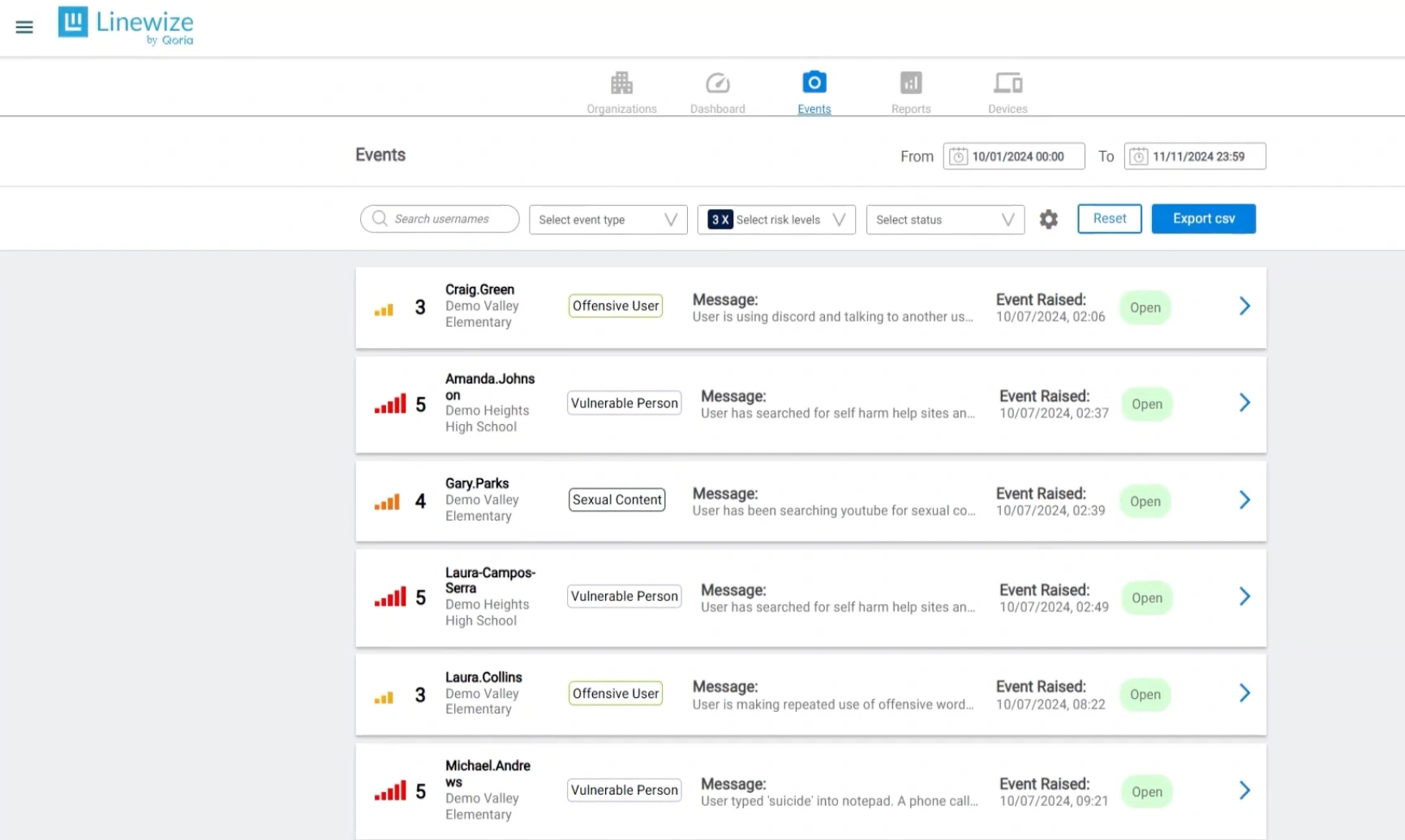
The software, developed by Linewize, will monitor the screens of all student devices. In the vast majority of cases, the data recorded will be deleted immediately. However, if Linewize’s AI models detect a potential safety threat, it will capture screenshots of the student’s device and classify them into one of five levels based on the severity of the threat, with five being the highest.
If the threat is serious, involving an imminent risk to safety, an individual at the district will immediately be notified (regardless of the time of day), while lower level threats will appear on a dashboard to be reviewed.
MacDonald emphasized that the district is not planning to use the system to detect cheating or AI usage, even if a student is suspected of such an action by a teacher or administrator. The system is programmed to detect threats or instances of sexual harassment, extreme bullying, suicide or suicidal ideation, and violence.
MacDonald also noted that while the school district is able to determine which student owns the device associated with a given capture, administration and faculty are not able to review or request past footage if it is not picked up by the system.
“If a principal says, ‘Hey, I heard a rumor that a kid said this,’ I can’t go into the system… it doesn't work that way. I don't use the filter to look and see what websites the student [went] to. [The system] is really only looking for active dangers for students,” said MacDonald.
The program has been piloted at Princeton Middle School for the past two weeks and has since detected around 100 threats, with the vast majority being false alarms.
“Most of [the alerts] are nothing to be concerned about. I quickly look and say, ‘Okay, this was a research project about drugs, right? It's not like a student is having an overdose.’ So I can immediately dismiss that one,” said MacDonald.
The vast majority of school districts in New Jersey already have an equivalent type of software installed, with PPS being relatively late to the game. PHS is also unique in that it provides Macbooks to students, which are harder to install software on and monitor compared to Chromebooks. MacDonald noted that PHS students have a history of attempting to evade monitoring software and restrictions.
“If students refuse to install the software, at some point we will have to lock the devices down. We have to get this working. If it turns out that we can't get that working reliably, then in the future, we won't be able to have students using MacBooks,” said MacDonald.
PHS students have been fairly resistant so far; the majority of students did not immediately install the software. As a result, PHS administration added a 15-minute homeroom on Monday, April 27 to ensure students complied with the update.
“I honestly think it's quite invasive… but in general, I guess it's kind of necessary, because a lot of people are doing what they shouldn't be doing in school instead of work. It's just another reminder that these are not our computers,” said Luca Nicolae-Jozwiakowski ’27.
Combined with the continuation of a filtering system such as Mosyle that restricts access to certain websites, Macdonald hopes the new software will help the district better comply with the Children’s Internet Protection Act and protect PHS students in a world of growing digital threats.
“I've talked to many districts, and almost every one that has set up these types of tools has [saved lives]. There have been several instances I know of … where [the system] has called a guidance counselor, and they called the police, and the police [arrived], and that student was about to take their life,” said MacDonald.