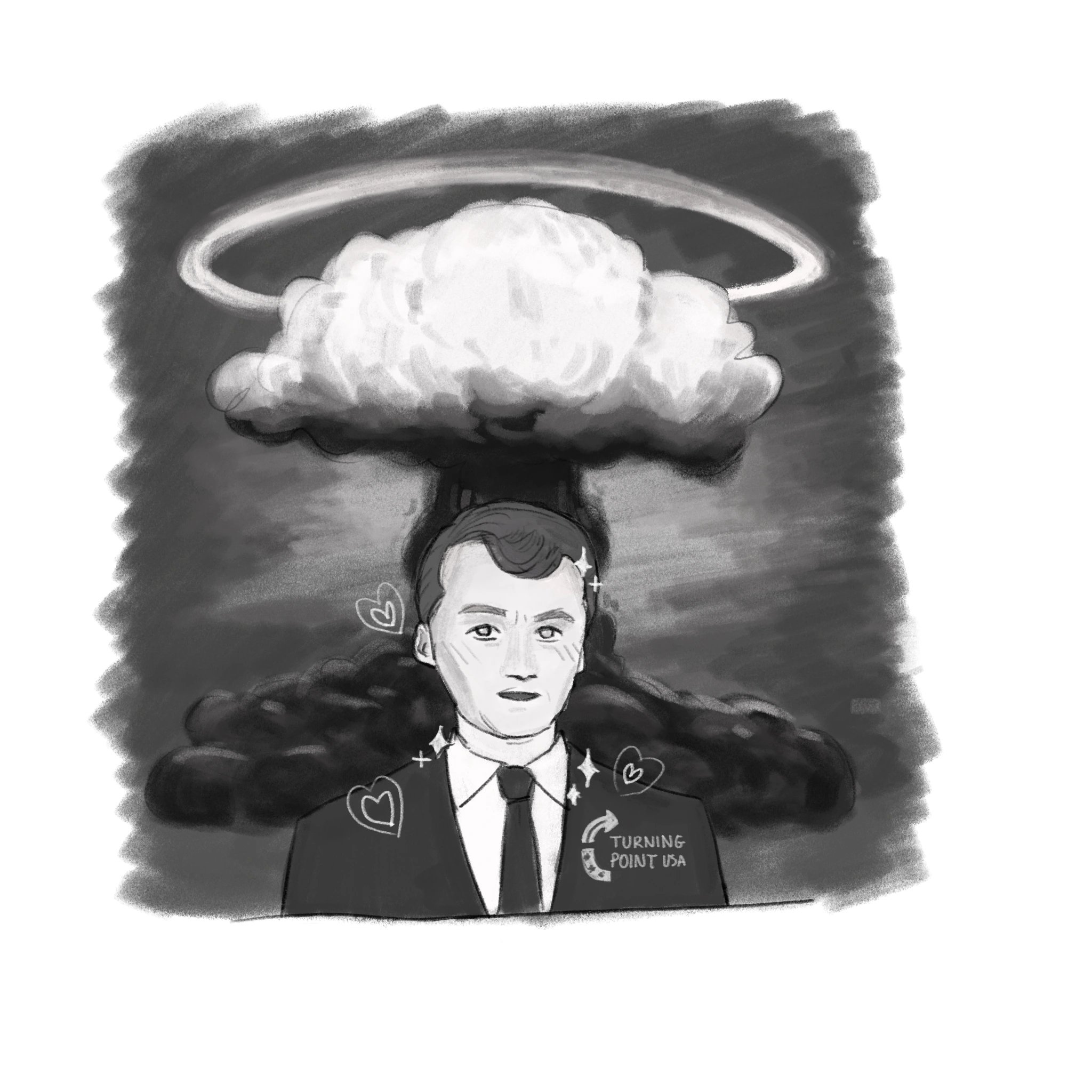
“Kirkification,” known for adding Charlie Kirk’s face to existing memes, was popular within days of his assassination. In the modern political landscape, memes about news headlines spread fast – often disregarding any respect that could be required for the situation. The media has a large influence over us as members of society, and often affects how we react to global news events. Rather than regarding these situations with the seriousness and importance they deserve, the memes and dark humor posts spread across the internet downplay the severity of such events.They effectively allow countless individuals to laugh for the sake of lightening the mood, regardless of the harm such desensitization can cause.
The idea of using memes to influence public opinion is called memetic warfare. First coined in 1976 by Richard Dawkins, multiple organizations such as NATO have studied its potential to take control of a narrative. As memes can spread so fast, they are extremely effective at transmitting ideas to younger generations, including perspectives of the news. For example, memes surrounding Sean “Diddy” Combs, which mocked his horrific crimes and undermined the experiences of victims, similarly turned serious events into something that is now easily trivialized by users on the internet. Consider exactly how this influences someone who is trying to form an opinion about the tragedy they have just heard about: despite inherently knowing that political violence and human trafficking must not be tolerated, when they see that the internet has deemed it socially acceptable to joke about death and sexual crimes, it is unlikely that they will consider higher moral grounds.
When internet users are surrounded by online posts and memes that enable the mocking of such events, it can cause desensitization to such serious topics. Desensitization, characterized by ScienceDirect as “a psychological process wherein repeated exposure to a stimulus, such as media violence, leads to a diminished emotional response,” can cause a lack of empathy in young people that is crucial in the modern political climate.
How does desensitization help our country’s political machines? Politics thrive off of polarization, pushing people to the extreme ends of the political spectrum to create a divide. As the rise in dark humor becomes more apparent, a lack of empathy can mean that members of any political party can become less likely to understand perspectives of the other side. According to a Pew Research Center study conducted in 2025, 80% of all adults cannot even agree on basic facts with the opposing party, showing just how far modern polarization has gone. When Nixon took part in Watergate, the Republican party understood that keeping Nixon in power would lead to the demise of Republican favorability. Now, when Trump incites a raid on the Capitol after fairly losing an election, it only invigorates his voterbase. The modern change is that extreme Republicans and Democrats find voting for the opposing party to be unthinkable, so no matter what happens, any respective candidates from “their side” will be getting their vote – the support based solely on party affiliation.
Currently, there are countless memes circulating around the internet that thirty years ago would shock and offend both faces of the coin — just as the level of corruption in politics, now accepted as normal, would surprise critics of the past. Jokes that trivialize the sexual harassment of more than 1,000 underage individuals at Jeffrey Epstein’s island would rightly horrify many people, but now such crimes are easily turned into memes and “Five Nights at Epstein’s” games. It is shocking and terrifying to see how countless people are unaffected by such jokes today.
Still, as long as we keep trivializing such issues, a divide within the country deepens at the cost of our collective conscience. Solutions do not stem from division and mockery, but from unification and empathy. It is important to prioritize your compassion and understanding for others, no matter how “harmless” dark jokes may appear.