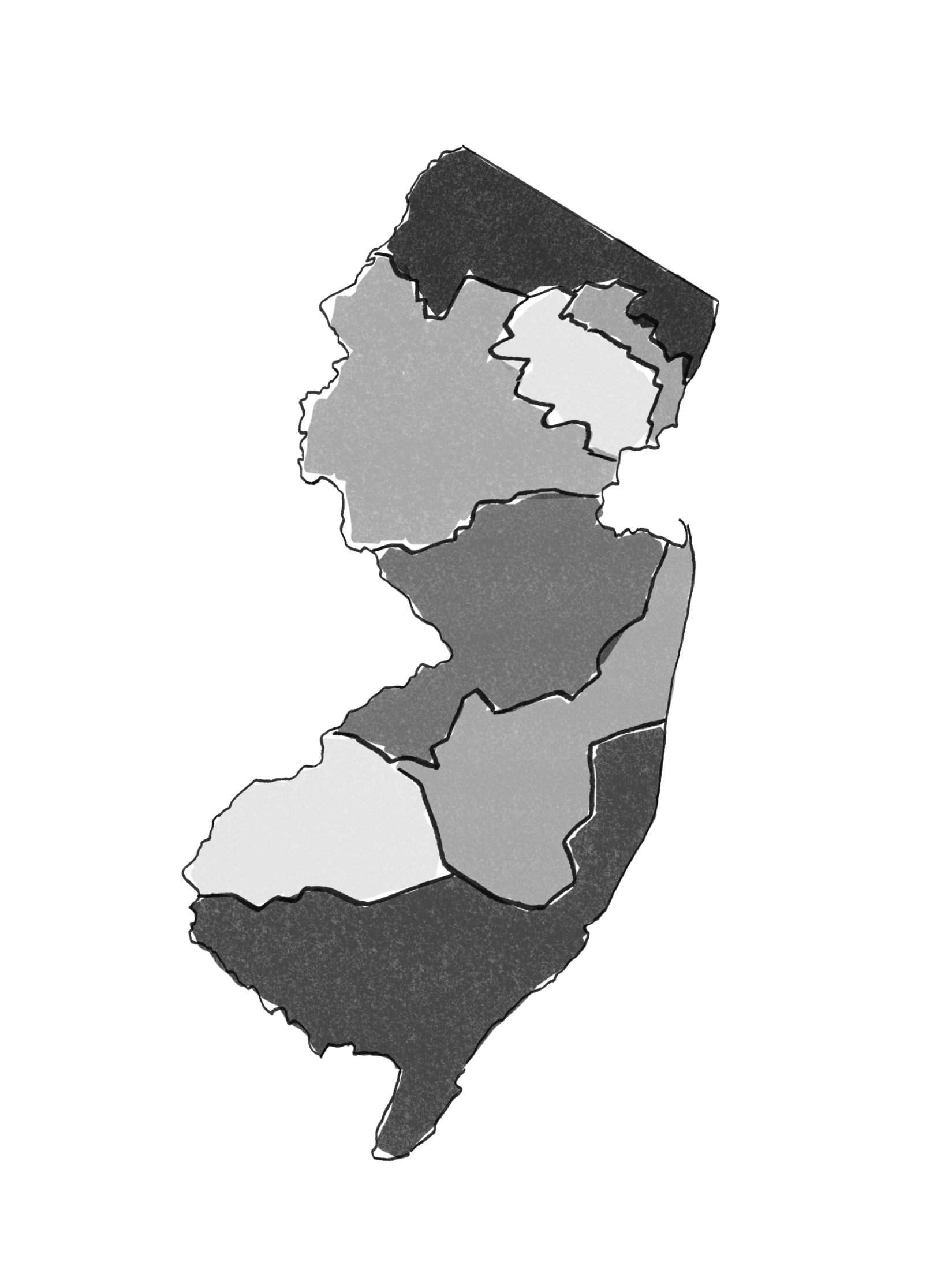
In a democracy, voters are supposed to choose their leaders. But in American politics this fundamental truth is being challenged; politicians are using algorithms to hand-pick their voters. The practice, called gerrymandering, is where an electoral constituency’s boundaries are rearranged to favor one group, generally either by party or race. As gerrymandering continues to evolve, the question remains: do opposing parties fight fire with fire?
The idea of gerrymandering began in 1812 when Massachusetts Governor Elbridge Gerry approved a salamander-shaped district designed to favor his party. However, at the time, gerrymandering was a rudimentary political tactic, and the execution of it was not nearly as systematic as it is today. As technology continues to develop, gerrymandering poses a more serious threat, as it is no longer a sporadic tactic vulnerable to human error, but instead, driven by data science and high-tech precision. Partisan gerrymandering continues to legally be used by political leaders to rig elections, especially after Rucho v. Common Cause (2019), which eliminated the federal judiciary’s jurisdiction to rule on partisan gerrymandering cases — essentially legalizing it unless states took action.
Countless cases have revealed that when political parties choose to retaliate with more gerrymandering, they are not defending democracy, but actively participating in its decline. Sam Wang, leader of the Princeton Gerrymandering Project and former candidate in the 12th District Democratic primary, argues that counter-redistricting to combat gerrymandering is not a sustainable solution.
“[Redistricting] is a thing that. . .Democrats could do in response to Republican gerrymandering, but I would hesitate to call that fighting gerrymandering,” said Wang. “What that does is doubling gerrymandering.”
While counter-gerrymandering often masquerades as a solution, it forces both parties to give up their values and pursuit for the public’s trust by validating gerrymandering. Gerrymandering isn’t a necessary evil to survive politically, and by fighting fire with fire, parties only affirm that assumption. It’s also worth noting that gerrymandering disproportionately disenfranchises marginalized groups.
The best way to end this anti-competitive practice is to take redistricting out of the hands of partisan lawmakers (which very few other democracies allow) and instead put it in the hands of an independent commission. Wang believes that the solution lies in independent citizen commissions rather than New Jersey’s current system utilizing a group of political appointees.
“Independent citizen commissions act like a jury, and they take the task of redistricting away from elected politicians and put it into the hands of citizens who then have much less self-interest,” Wang explained. “The single most predictive factor of a partisan gerrymandering is a process that’s controlled by one party.” With the current Supreme Court hostile to voting rights, the two major options for remedying this situation are either citizen ballot initiative or national legislation, both of which would remove the partisan obligation out of politics.
Instead of continuing with gerrymandering, Americans can campaign to end this undemocratic practice. There is a pending Congressional bill — the Freedom to Vote Act — that would not only ban all partisan gerrymandering (the only legal type currently per loophole), but would also implement much fairer voting practices. Congress has the federal power to reclaim control over elections, but whether it passes this bill or a similar one will be dependent on public pressure. As Congressman John Lewis once wrote, “Democracy is not a state. It is an act, and each generation must do its part.” Now is the time for our generation to participate and better ensure that each vote does matter. We have popular sovereignty, we are the ones that give these systems power, and when our voices are suppressed, democracy itself is in question.