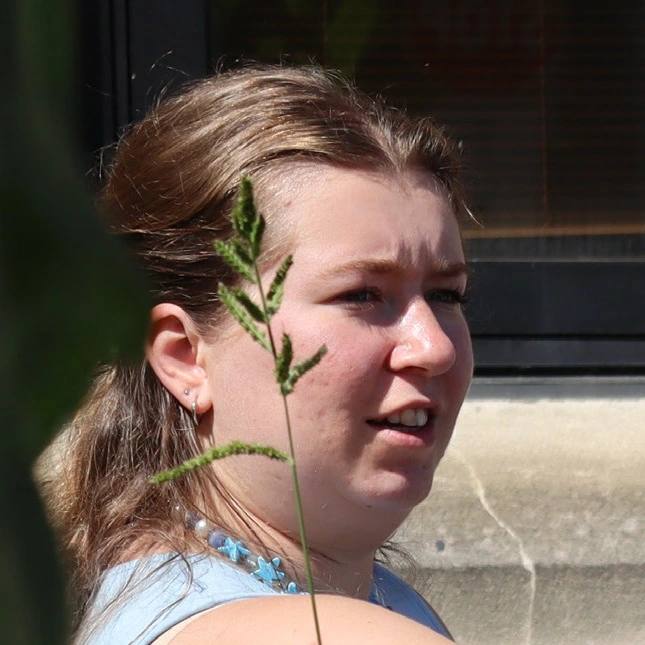
Environmental science and biology teacher Alexa Epstein brings a lifelong interest in marine biology to the PHS classroom, drawing from her own experiences in studying coral reefs. Her hope is to help students develop the same enthusiasm for science that her own high school teachers once inspired in her.
“When I was little, I grew up going to the beach in North Carolina, and there were always sea turtle nests on the beach. And when I was little, I saw them hatching one year, and I was … so obsessed with sea turtles,” said Epstein. “[In college], I actually got to live in Bermuda and study coral reefs for three months. … Getting to scuba dive four times a week was … the best experience ever.”
Growing up in Hunterdon County, NJ, but then leaving the state to attend college in Rhode Island and getting her teaching degree in North Carolina, Epstein was eager to return home. Coming back to New Jersey, she was drawn to Princeton by the community and school’s reputation.
“I saw that the job opened up for Princeton, and I was super excited. I love this town … and all the students are super excited to learn and excited to be here,” said Epstein. “I got excited about science from my high school science teachers, and I want to do the same thing for my students.
In the classroom, Epstein estimates that students can expect about a 50/50 split between lab work and outside work around the school property. While that has led to what she believes as a common misconception that environmental science involves less math than other sciences, she emphasizes that the course still challenges students. Instead of relying on heavy math, the course requires a different kind of rigor involving scientific concepts while learning through hands-on experiences.
“I love having students get into the dirt. …We’re doing a lot of stuff in the garden this year. We’re gonna do some walking field trips, do some water testing … where we will be outside and actually being environmental scientists,” said Epstein. “There’s also a possibility …we’re gonna try to do a field trip to the beach and do a beach cleanup and help out the beach community in that sense.”
Beyond teaching students about ecosystems and the environment, Epstein also sees environmental science as a chance to develop skills students can use outside school hours.
“We do tons of work with organization, tons of group work, tons of using your critical thinking skills,” said Epstein. “Basically, even if environmental science isn’t necessarily a topic that you’re super interested in, you will learn a ton outside of environmental science in the class.”
Outside of the classroom, Epstein enjoys cooking, scuba diving, spending time outdoors, and spending time with friends and family.