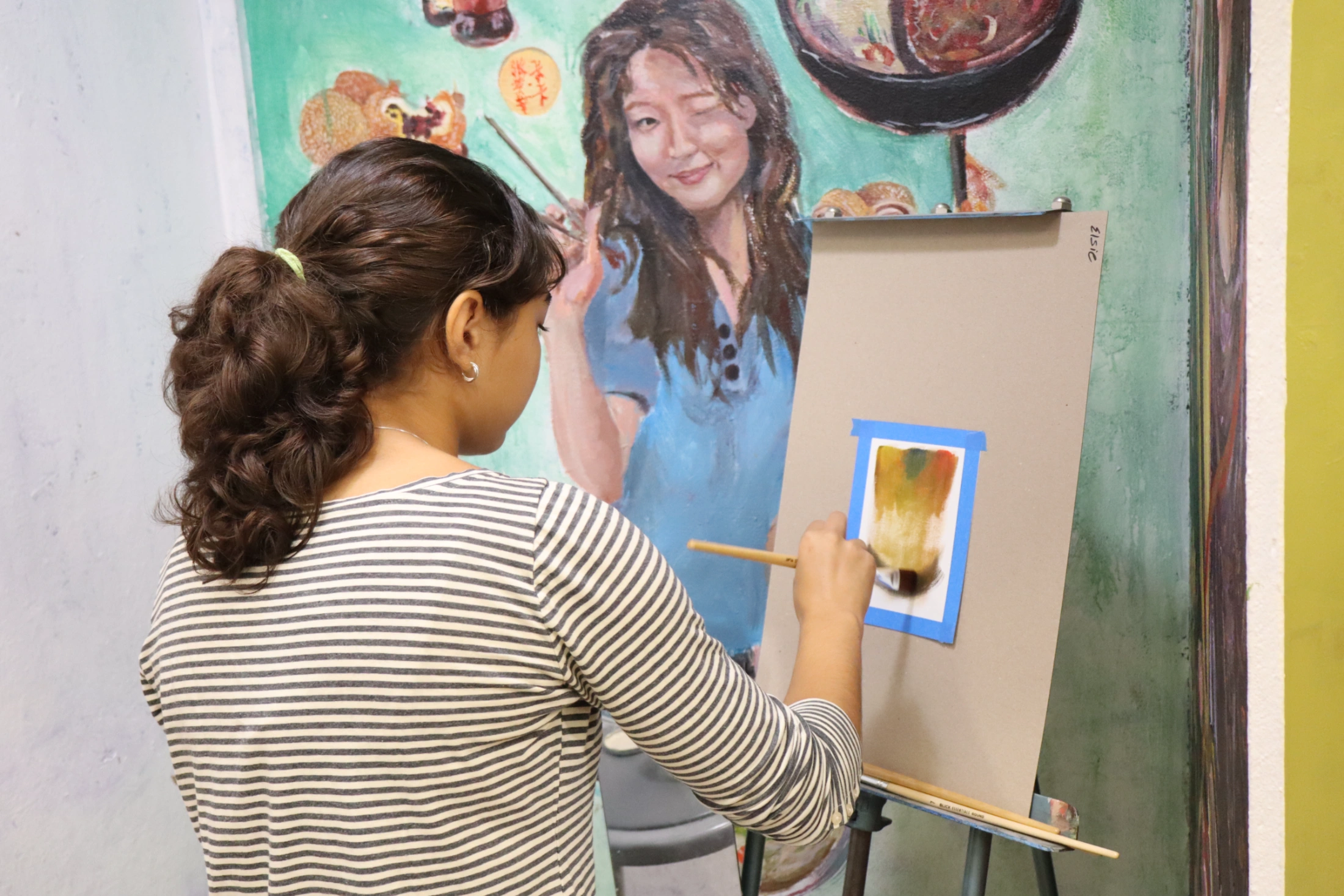
Look at any little kid: they fingerpaint, color with crayons, even scribble on the walls. They are not looking over their shoulder to see if someone thinks what they’re doing is pretty. But as we grow up, this creativity gets squeezed out of us. We learn to sort ourselves into categories: the “talented” few and the rest of us. Somewhere along the way, the child who colored outside the lines was not asked if they enjoyed coloring; they were simply reprimanded for not being neat.
There is developmental data to back this up. While IQs and SAT scores are rising, creative fluency — the ability to produce ideas — is tanking. A landmark William and Mary study found that from kindergarten up until third grade, fluency increases, but around fourth and fifth grade, it plateaus. Researchers Elizabeth Rosenblatt and Ellen Winner attribute this to children “self-filtering,” or kids checking ideas in their heads for how they will be received before sharing them. When the test was administered 18 years later in 2008, average scores significantly decreased, particularly for the youngest demographic.
The answer to this drop lies in a culture that constantly pressures us to seek external definitions of success, trapping us in an endless cycle of chasing likes, grades, money, status, and compliments. This harmful mindset gets carried over into our creative lives, when work is altered to give others what they like to see, not what we like to make. This is deeply embedded into society. According to a study by psychologist Jennifer Crocker at the University of Michigan, over 80 percent of college students base their self-worth on their grades and other external markers. When we create solely for an audience, the rawness of our inner selves is watered down.
This pressure is only ramped up by artificial intelligence. Right now, in just seconds, an AI can replicate a famous art style or write a complex poem. Artists find themselves trapped in an uphill battle, fighting to prove that their work is better than a machine. But trying to beat AI at its own game — speed and volume — is a losing fight.
Instead, we need to lean into what the AI can never replicate: intuition, vulnerability, and soul. Art is not another optimization problem we need to solve. It’s an expression of who you are. Ironically, the more vulnerable and true to yourself you are, the more you connect with others through your work. That’s exactly what allows us to form deep connections with paintings and music — we recognize something real, something relatable, something jarring in them that draws us in. Ultimately, it is only when we stop creating for an audience that we can truly connect with one, as we will have finally uncovered ourselves.